 US: 2-4 weeks,
  Europe: 1-2 weeks, 🌍 Worldwide: 1-4 weeks ✈️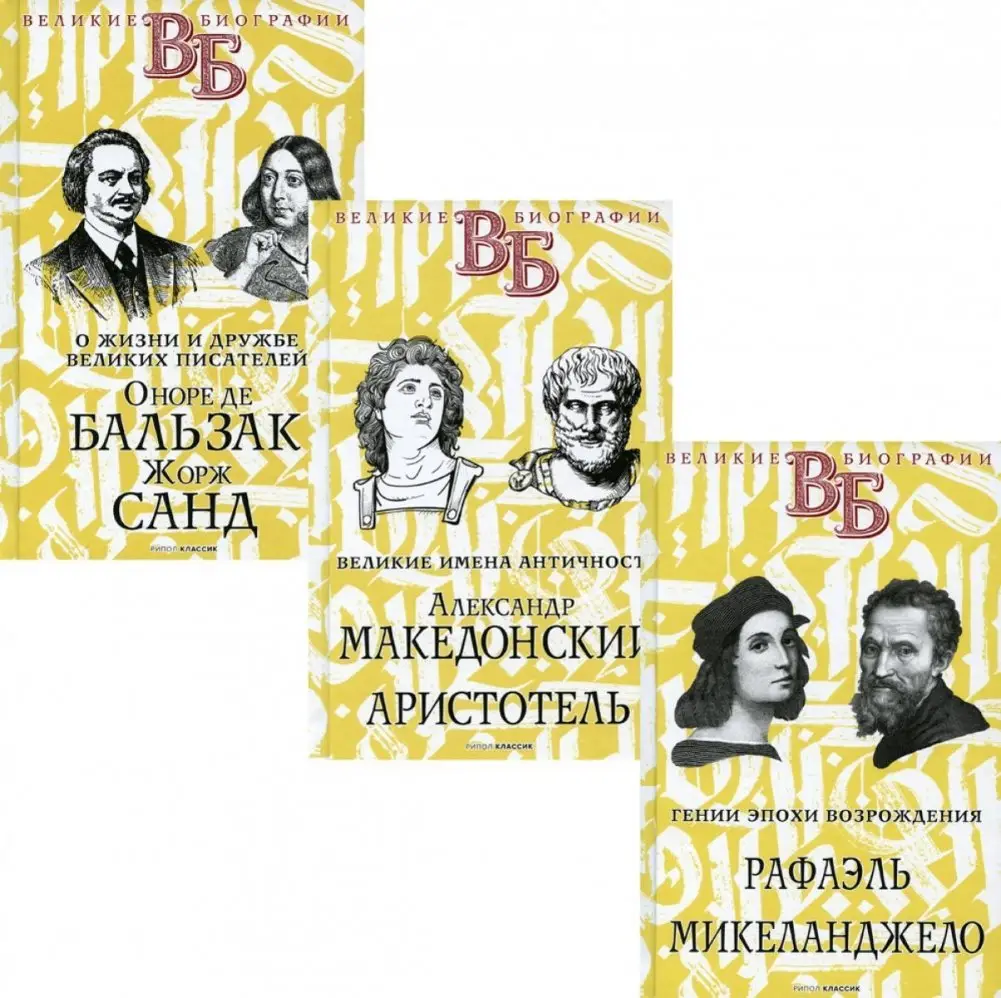
Жизнь великих в биографиях. Комплект в 3-х книгах: Гении эпохи Возрождения. Рафаэль. Микеланджело; Великие имена Античности. Александр Македонский. Аристотель; О жизни и дружбе французских писателей. Оноре де Бальзак. Жорж Санд | Lives of the Great i
By Орлов Е.Н., Брилиант С.М., Анненская Александра Никитична
Жизнь великих в биографиях. Комплект в 3-х книгах: Гении эпохи Возрождения. Рафаэль. Микеланджело; Великие имена Античности. Александр Македонский. Аристотель; О жизни и дружбе французских писателей. Оноре де Бальзак. Жорж Санд
Обзор
Комплект "Жизнь великих в биографиях" содержит три книги, охватывающие ключевые фигуры истории, искусства и литературы. Первая книга посвящена гениям Возрождения — Рафаэлю, признанному мастеру, и Микеланджело, воплотившему страдания и борьбу эпохи. Вторая книга исследует великие имена Античности, включая Александра Македонского, романтическую фигуру, и философа Аристотеля. Третья книга рассказывает о жизни и дружбе французских писателей Оноре де Бальзака и Жорж Санд.
Кому подойдёт
- Любители истории искусства и биографий.
- Студенты, изучающие историю, искусствоведение, литературу.
- Читатели, интересующиеся великими личностями разных эпох.
- Поклонники классической литературы и античной истории.
- Для возрастной категории 12+.
Ключевые особенности
- Комплект из 3 книг, посвященных биографиям выдающихся личностей.
- Включает жизни гениев Возрождения (Рафаэль, Микеланджело), деятелей Античности (Александр Македонский, Аристотель) и французских писателей (Бальзак, Санд).
- Общий объем 736 страниц, твердый переплет.
- Авторы: Орлов Е.Н., Брилиант С.М., Анненская А.Н.
- Издано в 2021 году, подходит для читателей от 12 лет.
Lives of the Great in Biographies. Set of 3 books: Geniuses of the Renaissance. Raphael. Michelangelo; Great Names of Antiquity. Alexander the Great. Aristotle; On the Life and Friendship of French Writers. Honoré de Balzac. George Sand
Overview
The "Lives of the Great in Biographies" set includes three books covering key figures in history, art, and literature. The first book focuses on Renaissance geniuses: Raphael, a recognized master, and Michelangelo, who embodied the era's suffering and struggle. The second book explores great names of Antiquity, including Alexander the Great, a romantic figure, and the philosopher Aristotle. The third book recounts the lives and friendships of French writers Honoré de Balzac and George Sand.
Who it's for
- Enthusiasts of art history and biographies.
- Students of history, art history, and literature.
- Readers interested in great personalities from different eras.
- Fans of classical literature and ancient history.
- For age group 12+.
Key features
- Set of 3 books dedicated to the biographies of distinguished individuals.
- Includes lives of Renaissance geniuses (Raphael, Michelangelo), Antiquity figures (Alexander the Great, Aristotle), and French writers (Balzac, Sand).
- Total of 736 pages, hardcover binding.
- Authors: Orlov E.N., Briliant S.M., Annenskaya A.N.
- Published in 2021, suitable for readers aged 12+.