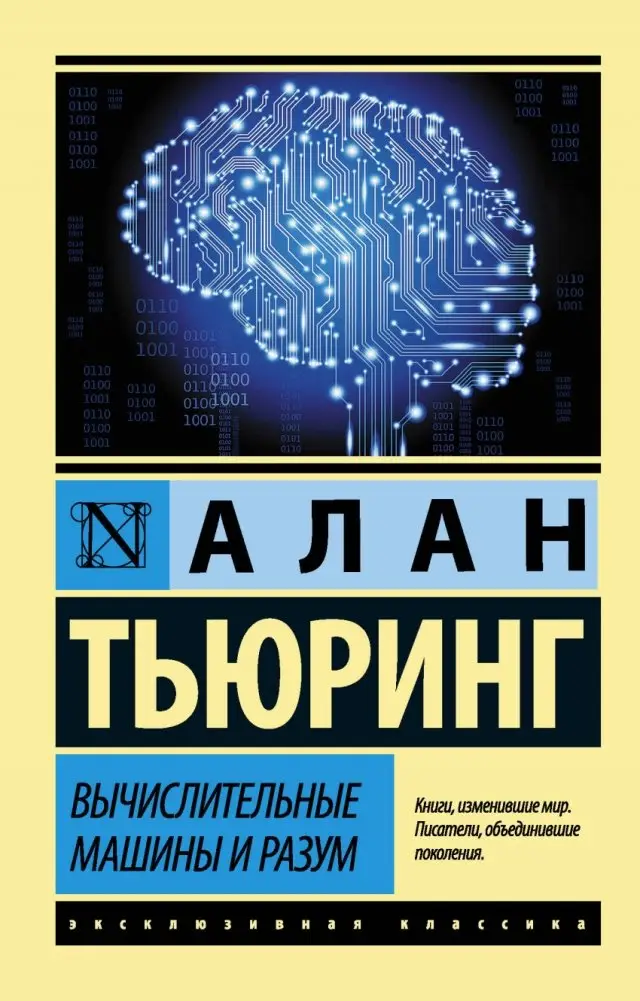
Вычислительные машины и разум | Computing Machinery and Intelligence
by Тьюринг А.
Тьюринг А., 2021, Эксклюзивная классика
Обзор
Впервые опубликованная в 1950 году, эта статья стала одной из самых обсуждаемых работ в области информатики и кибернетики. Именно здесь Алан Тьюринг впервые сформулировал понятие искусственного интеллекта и поставил знаменитый вопрос: «Может ли машина мыслить?». Тьюринг предложил рассматривать, может ли компьютер выполнять действия, неотличимые от человеческих. Статья также исследует, что такое искусственный интеллект и чем он отличается от человеческого, а также почему компьютер способен на самопознание.
Кому подойдёт
- Интересующимся историей информатики и кибернетики.
- Тем, кто хочет понять истоки концепции искусственного интеллекта.
- Читателям, размышляющим о природе сознания и мышления.
Ключевые особенности
- Язык: Русский
- Страниц: 128
- Тип обложки: мягкая обложка
- Издательство: АСТ
- Серия: Эксклюзивная классика
- ISBN: 9785171059705
Alan Turing, 2021, Exclusive Classics
Overview
First published in 1950, this seminal paper became one of the most cited and discussed works in computer science and cybernetics. It was in this article that Alan Turing first formulated the concept of artificial intelligence and posed the famous question: "Can machines think?". Turing proposed considering whether a computer could perform actions indistinguishable from human thought. The paper also explores the nature of artificial intelligence and its distinction from human intelligence, as well as why computers might be capable of self-awareness.
Who it's for
- Individuals interested in the history of computer science and cybernetics.
- Those seeking to understand the origins of the artificial intelligence concept.
- Readers contemplating the nature of consciousness and thought.
Key features
- Language: Russian
- Pages: 128
- Binding: Softcover
- Publisher: AST
- Series: Exclusive Classics
- ISBN: 9785171059705