 US: 2-4 weeks,
  Europe: 1-2 weeks, 🌍 Worldwide: 1-4 weeks ✈️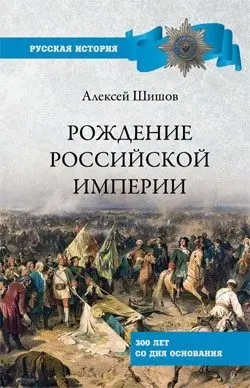
Рождение Российской империи. 300 лет со дня основания | The Birth of the Russian Empire: 300 Years Since Foundation
By Шишов Алексей Васильевич
Рождение Российской империи. 300 лет со дня основания
Шишов Алексей Васильевич - 2021 - Русская история
Обзор
Слово «империя» означает «власть», а «император» — «правитель». Российская империя, как и древнеримская, прошла долгий и сложный путь, оставив значительное духовное и историческое наследие. Петр Великий и Екатерина Великая считаются ключевыми фигурами в ее создании. Официально основанная в 1721 году, империя просуществовала почти два столетия, став обширным и могущественным государством, объединившим множество народов.
Кому подойдёт
- Интересующимся историей России
- Тем, кто изучает периоды правления Петра I и Екатерины II
- Читателям, желающим узнать о становлении Российской империи
Ключевые особенности
- Язык: Русский
- Количество страниц: 432
- Тип обложки: твердый переплёт
- Издательство: Вече
- Год издания: 2021
- Серия: Русская история
- ISBN: 9785448430770
The Birth of the Russian Empire: 300 Years Since Foundation
Alexey V. Shishov - 2021 - Russian History
Overview
The word "empire" translates from Latin as "power," and "emperor" as "ruler." The Russian Empire, much like its ancient Roman counterpart, traversed a long and complex journey, leaving behind a substantial spiritual and historical legacy. Peter the Great and Catherine the Great are recognized as the principal architects of its formation. Officially established in 1721, the empire endured for nearly two centuries, evolving into an expansive and formidable state that united numerous peoples.
Who it's for
- Readers interested in Russian history
- Those studying the reigns of Peter I and Catherine II
- Individuals seeking to understand the establishment of the Russian Empire
Key features
- Language: Russian
- Pages: 432
- Binding: Hardcover
- Publisher: Veche
- Year: 2021
- Series: Russian History
- ISBN: 9785448430770