 US: 2-4 weeks,
  Europe: 1-2 weeks, 🌍 Worldwide: 1-4 weeks ✈️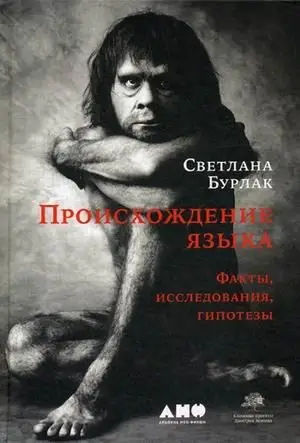
Происхождение языка. Факты, исследования, гипотезы | The Origin of Language: Facts, Research, Hypotheses
By Бурлак Светлана
Происхождение языка. Факты, исследования, гипотезы
Светлана Бурлак, 2021
Обзор
Исследование происхождения человеческого языка, или глоттогенеза, требует сбора улик из различных научных областей. Антропология, нейрофизиология, археология и генетика предоставляют данные о формировании коммуникативных систем, работе мозга, древних практиках и генетических предпосылках. Лингвистика анализирует структуру грамматики и процессы ее усвоения. Книга рассматривает вопрос о едином или множественном происхождении языков.
Кому подойдёт
- Читателям, интересующимся эволюцией человека и языка.
- Студентам и специалистам в области лингвистики, антропологии, нейробиологии.
- Любознательным людям, стремящимся понять истоки человеческой речи.
Ключевые особенности
- Язык: Русский
- Объем: 610 страниц
- Тип обложки: твердый переплет
- Издательство: Альпина Паблишер
- ISBN: 9785001390596
- Серия: Научно-популярная литература
The Origin of Language: Facts, Research, Hypotheses
Svetlana Burlak, 2021
Overview
The study of the origin of human language, or glottogenesis, resembles a detective investigation, requiring the piecing together of evidence from diverse scientific fields. Anthropology examines the evolution of communicative systems in Homo species, while neurophysiology explores the brain's language centers. Archaeology offers insights through tools and ancient practices, and genetics investigates the genetic basis for speech. Linguistics analyzes grammar formation and acquisition. The book also addresses the debate on whether human language originated from a single source or multiple proto-languages.
Who it's for
- Readers interested in human evolution and the development of language.
- Students and professionals in linguistics, anthropology, and neurobiology.
- Curious individuals seeking to understand the roots of human communication.
Key features
- Language: Russian
- Pages: 610
- Binding: Hardcover
- Publisher: Alpina Publisher
- ISBN: 9785001390596
- Series: Popular Science Literature