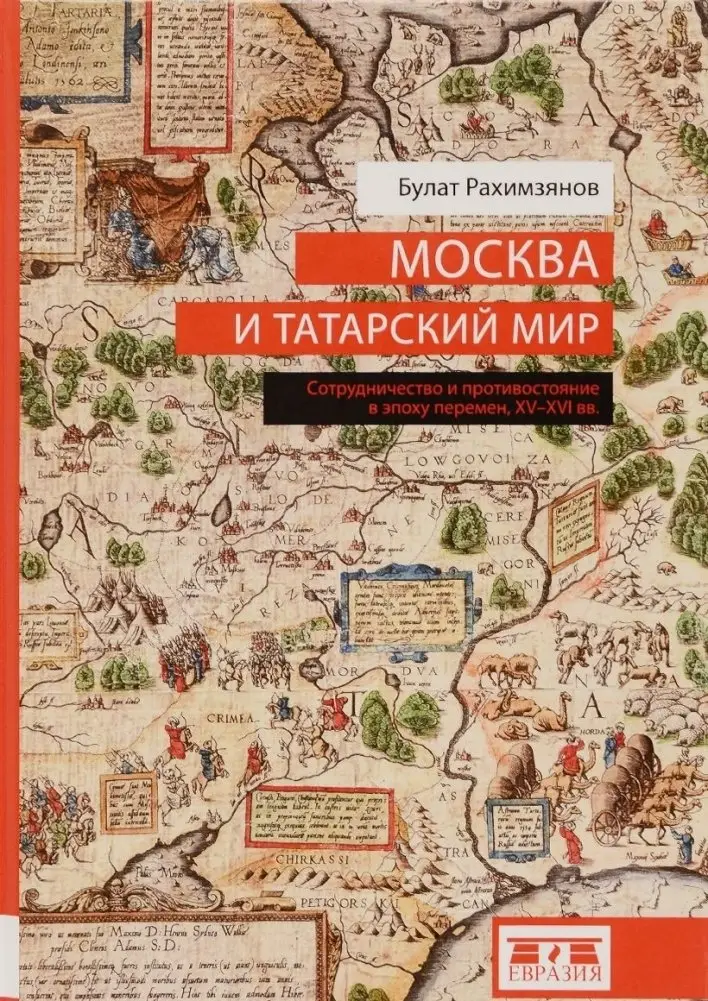
Москва и татарский мир | Moscow and the Tatar World
Рахимзянов Булат Раимович, 2016
Обзор
Книга исследует взаимоотношения Московского государства с татарскими образованиями, возникшими после распада Золотой Орды. В центре внимания — XV-XVI века, период, когда Московское княжество постепенно укрепляло свои позиции. Рассматриваются связи с Большой Ордой, Астраханским, Крымским, Казанским, Сибирским, Касимовским ханствами и Ногайской Ордой. Автор анализирует, кем было Московское государство в системе наследников Улуса Джучи — внешним или внутренним игроком, и как менялся его статус.
Кому подойдёт
- Специалистам, исследующим историю Золотой Орды и Московского государства XV-XVI вв.
- Любителям средневековой истории Евразии.
- Читателям, интересующимся политическими и историческими связями между Русью и татарскими ханствами.
Ключевые особенности
- Язык: Русский
- Тип обложки: твердый переплёт
- Год издания: 2016
- Количество страниц: 396
- Издательство: Евразия
- ISBN: 9785918521557
Bulat R. Rakhimzyanov, 2016
Overview
This work examines the relationship between the Muscovite state and the Tatar entities that emerged after the fragmentation of the Golden Horde. The focus is on the 15th-16th centuries, a period when the Grand Duchy of Moscow gradually strengthened its influence. It explores connections with the Great Horde, the Astrakhan, Crimean, Kazan, Siberian, and Kasimov Khanates, as well as the Nogai Horde. The author investigates Moscow's role within the Jochid Ulus successor system—whether as an external or internal player—and how its status evolved.
Who it's for
- Specialists researching the Golden Horde and 15th-16th century Muscovite state.
- Enthusiasts of medieval Eurasian history.
- Readers interested in the political and historical ties between Rus' and the Tatar khanates.
Key features
- Language: Russian
- Binding: Hardcover
- Publication Year: 2016
- Pages: 396
- Publisher: Eurasia
- ISBN: 9785918521557