

Мертвые души | Dead Souls
Обзор
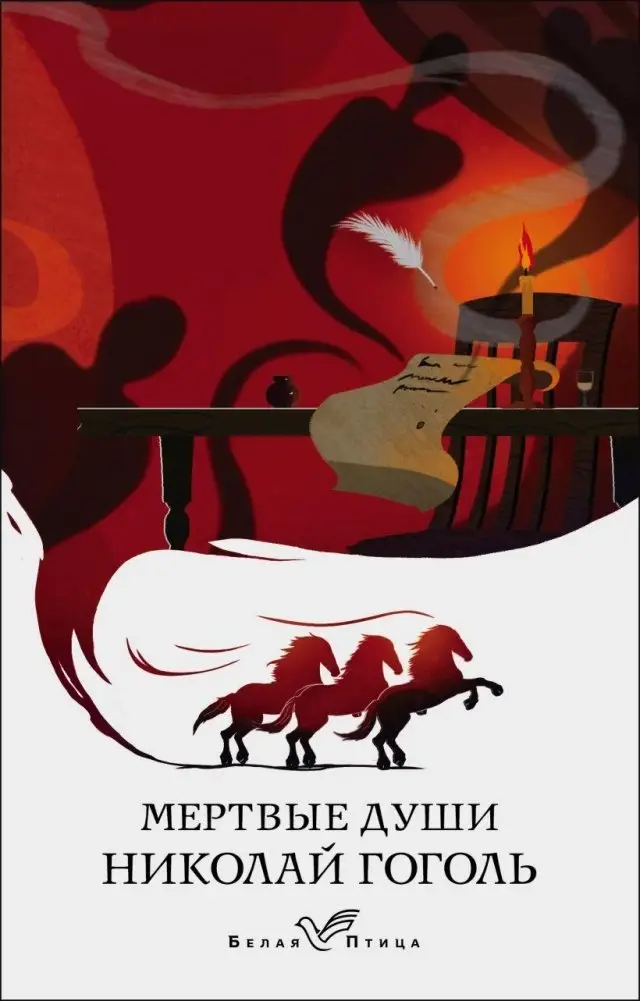
«Вся Русь явится в нем», — говорил Николай Гоголь о своем будущем романе «Мертвые души», который позднее сам же назвал поэмой, подчеркивая его эпический размах. Изначально сюжет, вдохновленный Александром Пушкиным, должен был стать основой для авантюрно-плутовского повествования. Однако традиционные жанровые рамки оказались слишком узки, чтобы вместить всё богатство и глубину гоголевского замысла. Произведение поэтически раскрывает образ Руси, сравнивая ее с неудержимой «птицей-тройкой», что символизирует загадочную и могучую природу страны. Сквозь призму путешествий авантюриста Чичикова Гоголь мастерски рисует панораму провинциальной России, обличая пороки поместного дворянства и бюрократии. Этот выдающийся роман-поэма остается классическим произведением русской литературы, глубоко исследующим национальный характер и социальные проблемы.
Кому подойдёт
- Ценителей русской классической литературы и мировых шедевров.
- Читателей, интересующихся острой сатирой на человеческие пороки.
- Студентов и исследователей русской филологии и культурологии.
- Всех, кто желает глубже понять историю и душу России.
Ключевые особенности
- Автор: Николай Васильевич Гоголь, великий русский писатель.
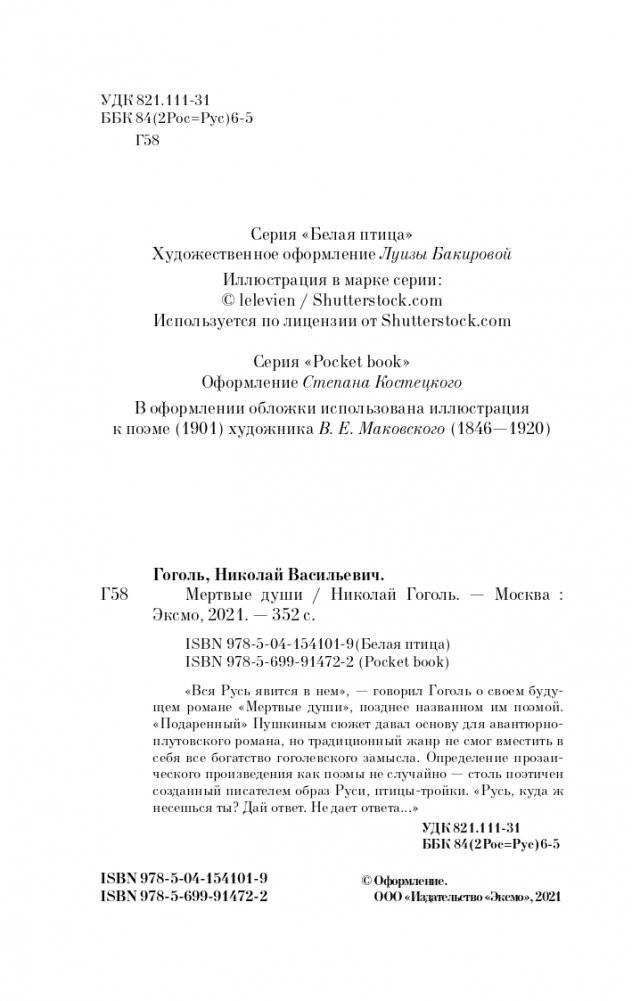
- Год издания: 2021 (данное издание).
- Язык: Русский, полный оригинальный текст произведения.
- Количество страниц: 352.
- Тип обложки: Мягкая обложка, удобная для повседневного чтения.
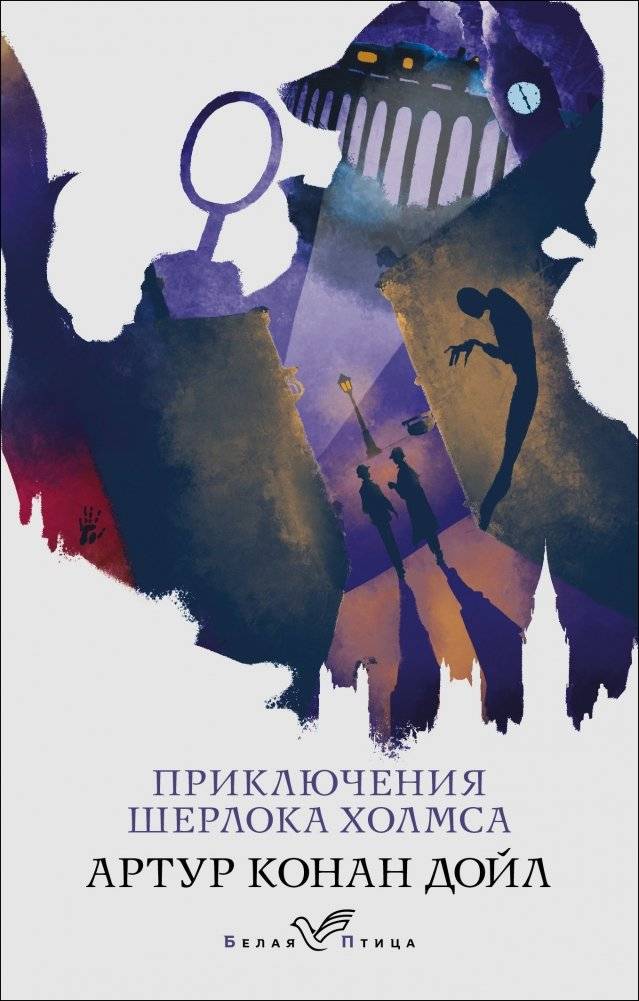
- Серия и издательство: «Белая птица» от издательства «Эксмо».
Overview
“All of Russia will appear in it,” said Nikolai Gogol about his ambitious future novel “Dead Souls,” which he himself later termed a poem, emphasizing its epic scope. The initial plot, inspired by Alexander Pushkin, was conceived as the foundation for an adventurous picaresque narrative. However, the traditional genre conventions proved too restrictive to fully encompass the richness and profound depth of Gogol's creative vision. The work poetically unveils the image of Russia, likening it to the unstoppable “troika bird,” a potent symbol reflecting the nation's enigmatic and powerful essence. Through the travels of the enterprising adventurer Chichikov, Gogol masterfully crafts a panorama of provincial Russia, exposing the vices of the landed gentry and bureaucracy. This outstanding novel-poem endures as a classic of Russian literature, offering a profound exploration of the national character and pervasive social issues.
Who it's for
- Readers who appreciate Russian classical literature and world masterpieces.
- Those interested in sharp satire exposing human vices.
- Students and scholars of Russian philology and cultural studies.
- Anyone seeking a deeper understanding of Russia's history and soul.
Key features
- Author: Nikolai Vasilyevich Gogol, a monumental figure in Russian literature.
- Publication Year: 2021 (this specific edition).
- Language: Russian, presenting the complete original text.
- Page Count: 352 pages.
- Cover Type: Paperback, suitable for comfortable reading.
- Series and Publisher: Part of the «White Bird» series from Eksmo publishing house.