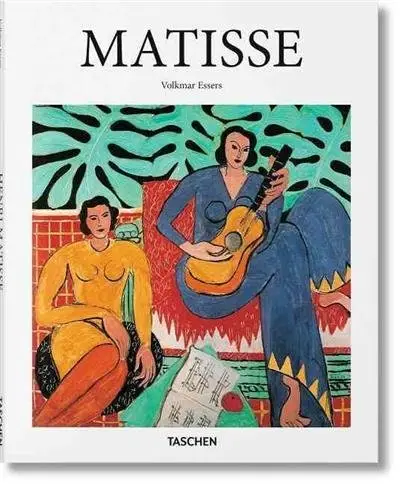
Матисс | Matisse
Volkmar Essers, 2016
Overview
Henri Matisse's work is celebrated for its vital colors and simple forms, reflecting a belief in their expressive power. While known for his paintings, Matisse also explored drawing, sculpture, lithography, stained glass, and collage, notably developing his unique cut-out technique later in life. His subjects, often conventional like nudes and portraits, were transformed by bold color and fluid draftsmanship, securing his place as a 20th-century master. Matisse's palette, featuring vivid blues, purples, and yellows, liberated his art from strict reality, seeking instead a vital harmony often inspired by music. This book surveys the full scope of his creative career, from his early involvement with Fauvism to later projects like Jazz and the Chapelle du Rosaire.
Who it's for
- Art enthusiasts interested in modernist masters.
- Readers exploring the Fauvism movement and its key figures.
- Those fascinated by the evolution of artistic techniques, including collage.
Key features
- Language: English
- Binding: Hardcover
- Pages: 96
- Publisher: Taschen
- ISBN: 9783836529044
- Year: 2016