 US: 2-4 weeks,
  Europe: 1-2 weeks, 🌍 Worldwide: 1-4 weeks ✈️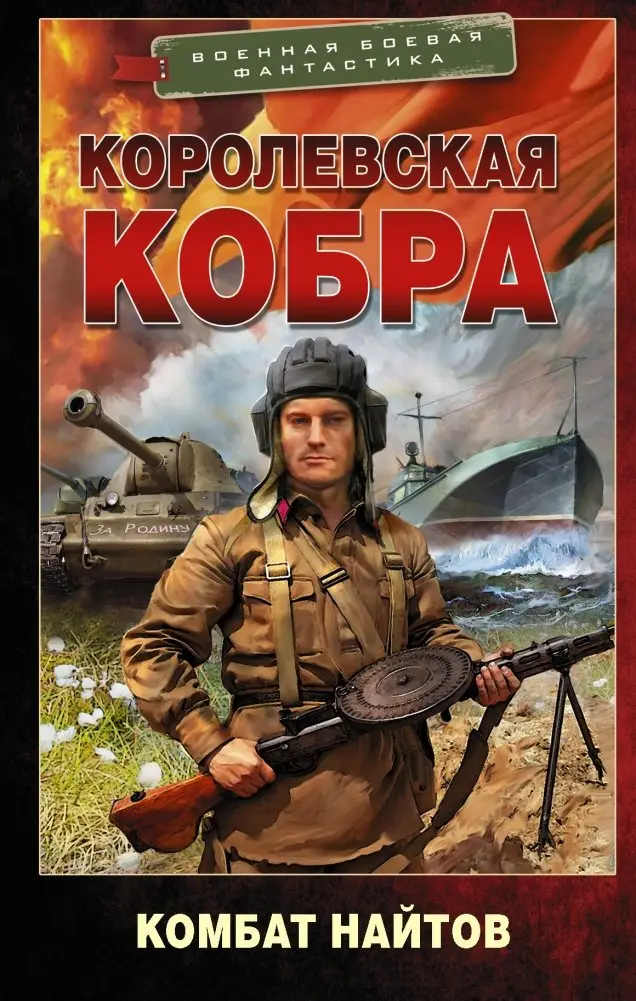
Королевская кобра | Royal Cobra
By Найтов Комбат
Королевская кобра
Найтов Комбат, 2021
Обзор
Роман исследует альтернативный сценарий Великой Отечественной войны, фокусируясь на технических аспектах и возможностях Красной Армии. Основной вопрос заключается в том, как предотвратить отступление советских войск к ключевым городам. В центре сюжета — попаданец из XXI века, бывший танкист, призванный решить проблемы вооружения РККА, в частности, слабость противотанковой артиллерии и недооценку немецких тяжелых танков. Рассматриваются упущенные возможности в разработке советской бронетехники и артиллерии, таких как танк КВ-3 и пушка ЗиС-2.
Кому подойдёт
- Любителям военной фантастики с элементами альтернативной истории.
- Читателям, интересующимся техническими аспектами Второй мировой войны.
- Поклонникам историй о попаданцах в прошлое.
- Возрастная категория 16+.
Ключевые особенности
- Язык: Русский
- Год издания: 2021
- Издательство: АСТ
- Серия: Военная боевая фантастика
- Тип обложки: твердый переплёт
- Количество страниц: 352
- ISBN: 9785171325817
Royal Cobra
Naytov Combat, 2021
Overview
This novel explores an alternate scenario of the Great Patriotic War, focusing on technical aspects and the capabilities of the Red Army. The central question revolves around preventing the retreat of Soviet forces towards key cities. The plot follows a time traveler from the 21st century, a former tankman, tasked with solving the Red Army's armament problems, particularly the weakness of its anti-tank artillery and the underestimation of German heavy tanks. It examines missed opportunities in the development of Soviet armored vehicles and artillery, such as the KV-3 tank and the ZiS-2 gun.
Who it's for
- Fans of military science fiction with alternative history elements.
- Readers interested in the technical aspects of World War II.
- Admirers of time travel stories.
- Age category 16+.
Key features
- Language: Russian
- Publication Year: 2021
- Publisher: AST
- Series: Military Combat Fiction
- Binding: Hardcover
- Page Count: 352
- ISBN: 9785171325817