 US: 2-4 weeks,
  Europe: 1-2 weeks, 🌍 Worldwide: 1-4 weeks ✈️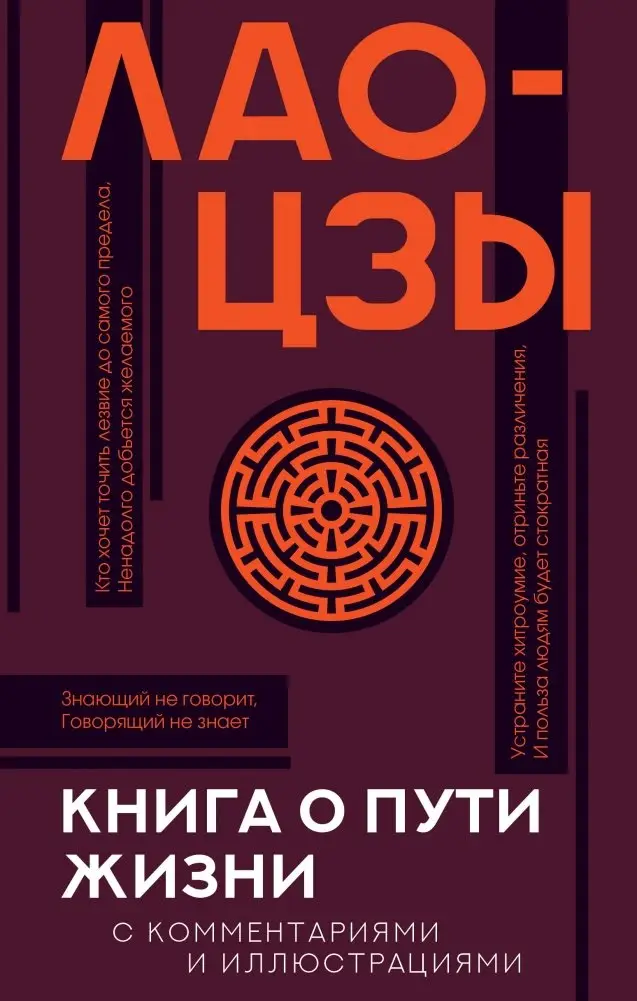
Книга о пути жизни с комментариями и иллюстрациями | The Book of the Way of Life with Commentary and Illustrations
By Лао-цзы
Книга о пути жизни с комментариями и иллюстрациями
Лао-цзы, 2021
Обзор
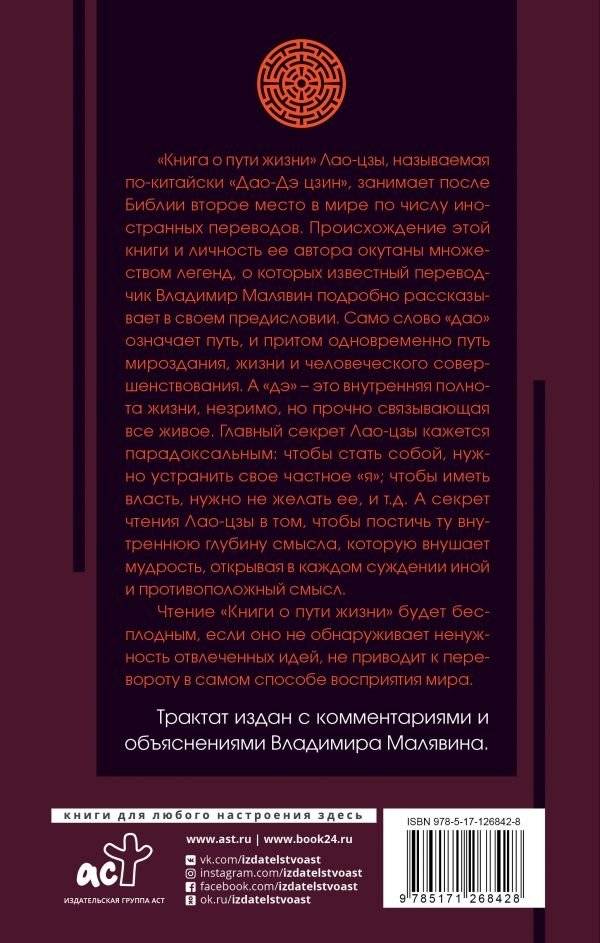
«Дао-Дэ цзин», известная как «Книга о пути жизни», является вторым наиболее переводимым произведением в мире после Библии. Эта книга окутана легендами, касающимися ее происхождения и автора, о чем подробно рассказывает переводчик Владимир Малявин в предисловии. Слово «дао» обозначает путь мироздания, жизни и самосовершенствования, а «дэ» — внутреннюю полноту бытия, связующую все живое. Основная мудрость Лао-цзы заключается в парадоксальных идеях: для обретения себя необходимо отказаться от эго, а для обретения власти — не стремиться к ней.
Кому подойдёт
- Читателям, интересующимся восточной философией.
- Тем, кто ищет глубокий смысл в жизни и самосовершенствовании.
- Любителям классических текстов с комментариями и иллюстрациями.
Ключевые особенности
- Автор: Лао-цзы
- Язык: Русский
- Издательство: АСТ
- Серия: Популярная философия с иллюстрациями
- Тип обложки: твердый переплёт
- Год издания: 2021
- Количество страниц: 288
- ISBN: 9785171268428
The Book of the Way of Life with Commentary and Illustrations
Lao Tzu, 2021
Overview
Lao Tzu's "Tao Te Ching," known as "The Book of the Way of Life," holds the distinction of being the second most translated book globally, following only the Bible. The origins of this seminal work and the identity of its author are shrouded in legend, as detailed in the preface by renowned translator Vladimir Malyavin. The term "dao" signifies the path of the cosmos, life, and human cultivation, while "de" represents the inner fullness of existence that intrinsically connects all living things. Lao Tzu's central paradox suggests that to truly find oneself, one must relinquish the ego, and to gain influence, one must not seek it.
Who it's for
- Readers interested in Eastern philosophy and ancient wisdom.
- Individuals seeking profound insights into life and personal growth.
- Those who appreciate classic texts enriched with commentary and visual elements.
Key features
- Author: Lao Tzu
- Language: Russian
- Publisher: AST
- Series: Popular Philosophy with Illustrations
- Binding: Hardcover
- Publication Year: 2021
- Pages: 288
- ISBN: 9785171268428