 US: temporary delays — postal services aligning new import rules,
  Europe: 1–2 weeks, 🌍 Worldwide: 1–4 weeks ✈️
Loading...
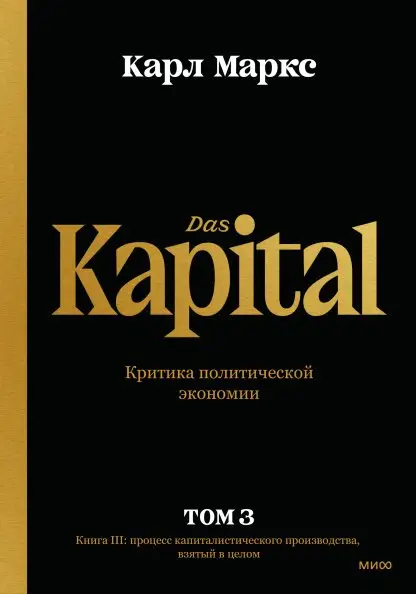
By Маркс Карл
Маркс Карл2023
«Капитал» Карла Маркса — книга, переведенная на десятки языков и многократно переизданная. В этом труде раскрывается механизм подчинения человеческого общества капиталом. В третьей книге «Капитала» анализируются тенденции развития капитализма и динамика нормы прибыли. Работа над «Капиталом» началась именно с третьего тома — это его экономическое обоснование, источник данных и расчетов. В этом томе приведены четвертая книга «Капитала» — «Теории прибавочной стоимости» и статьи других экономистов и философов.
Marx Karl2023
Karl Marx's Capital has been translated into more than 50 languages and republished more than 220 times. This work reveals the mechanism by which money, accumulating into capital, subordinates human society. The third book of Capital analyzes the tendencies of capitalism's development and the dynamics of the rate of profit. Work on Capital began with the third volume which provides its economic justification, source of data and calculations.