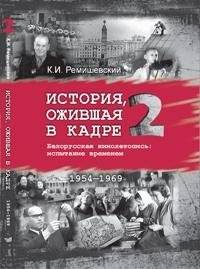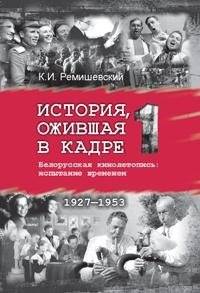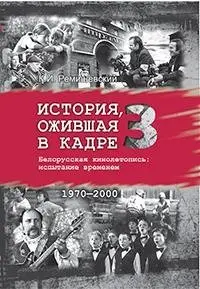
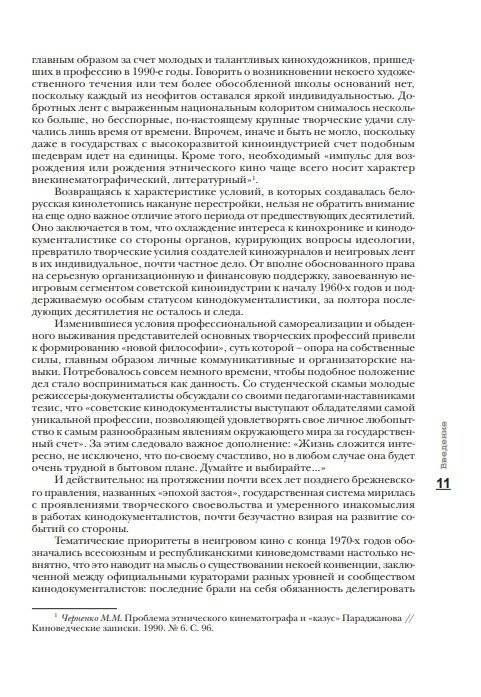
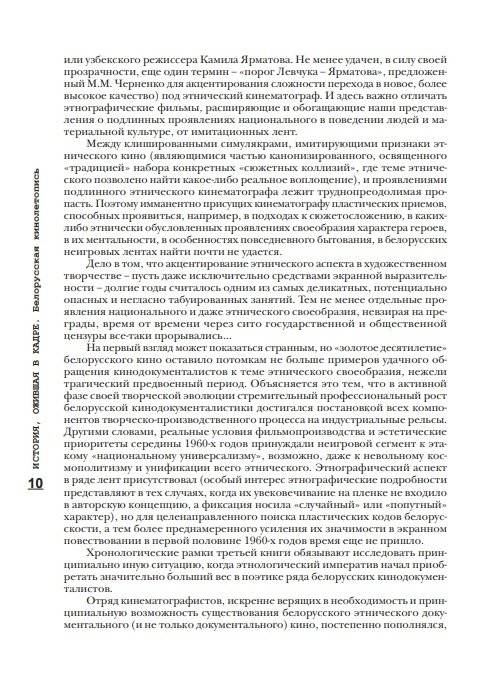
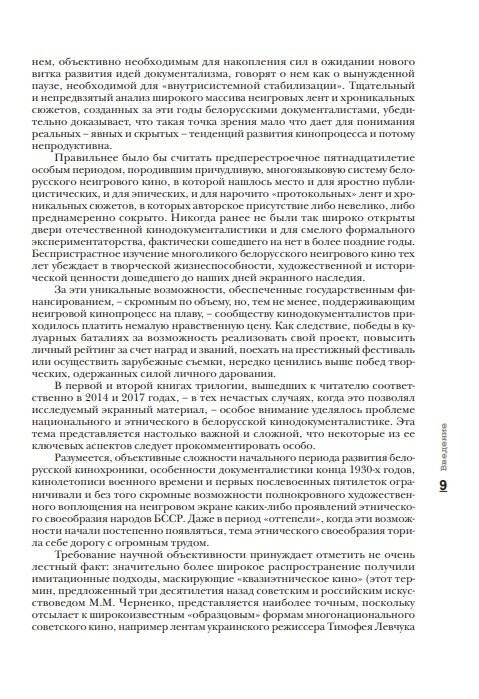
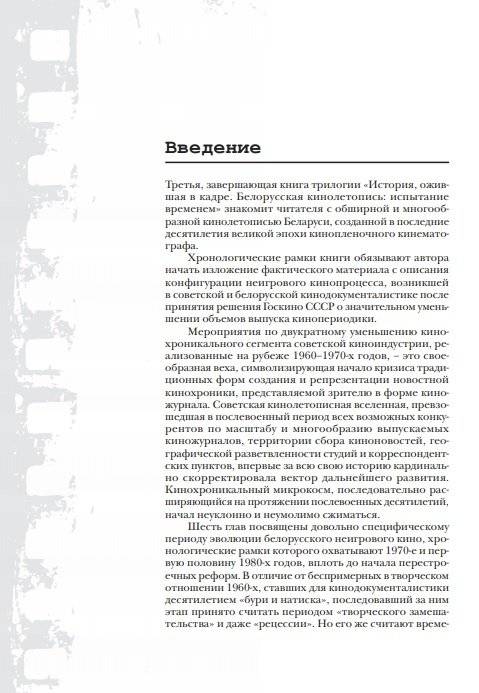
История, ожившая в кадре. Белорусская кинолетопись: испытание временем. В 3 книгах. Книга 3. 1970-2010гг. | History Brought to Life on Screen: Belarusian Film Chronicle Through the Ages. Book 3: 1970-2010
Ремишевский К.И., 2019, Серия: История, ожившая в кадре
Обзор
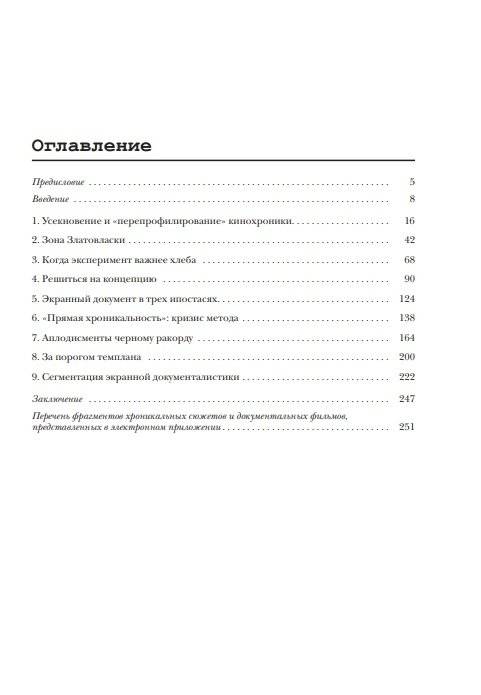
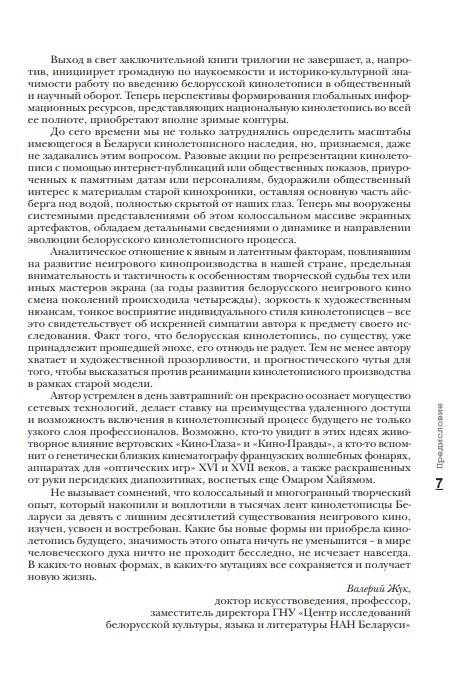
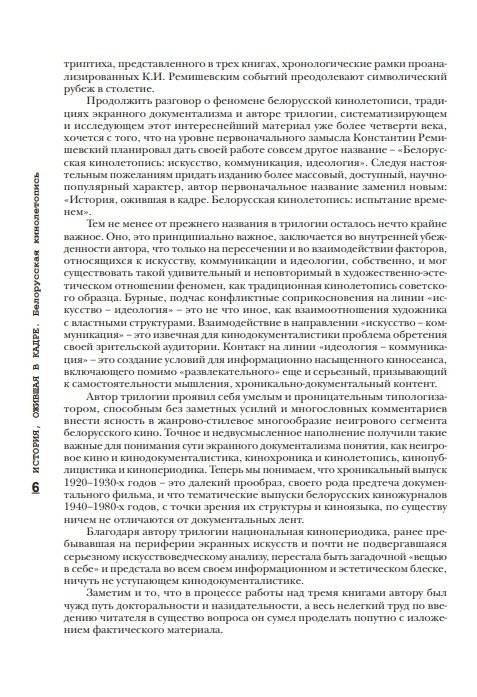
Эта третья и заключительная книга трилогии посвящена белорусской кинолетописи последних десятилетий эпохи кинопленки. Исследуются источники пополнения национального киноархива в условиях перехода к цифровым медиа. Анализируется возможность создания исторически достоверного экранного образа современной Беларуси в постпленочную эпоху. Электронное приложение позволит ознакомиться с тематическим и жанровым диапазоном неигровых лент и сюжетов кинопериодики.
Кому подойдёт
- Специалистам в сфере экранных искусств
- Искусствоведам и культурологам
- Историкам
- Широкому кругу читателей, интересующихся историей кино
Ключевые особенности
- Язык: Русский
- Страниц: 255
- Тип обложки: твердый переплет
- ISBN: 9789850630391
- Год издания: 2019
- Серия: История, ожившая в кадре
K.I. Remishevsky, 2019, Series: History Brought to Life on Screen
Overview
This third and final book of the trilogy explores the Belarusian film chronicle from the final decades of the film era. It examines sources for enriching the national film archive amidst the transition to digital media. The study analyzes the feasibility of creating historically accurate screen portrayals of modern Belarus in the post-film era. An electronic supplement offers insight into the thematic and genre range of non-fiction films and newsreel segments.
Who it's for
- Screen arts professionals
- Art historians and cultural scholars
- Historians
- General readers interested in film history
Key features
- Language: Russian
- Pages: 255
- Binding: Hardcover
- ISBN: 9789850630391
- Publication Year: 2019
- Series: History Brought to Life on Screen