 US: 2-4 weeks,
  Europe: 1-2 weeks, 🌍 Worldwide: 1-4 weeks ✈️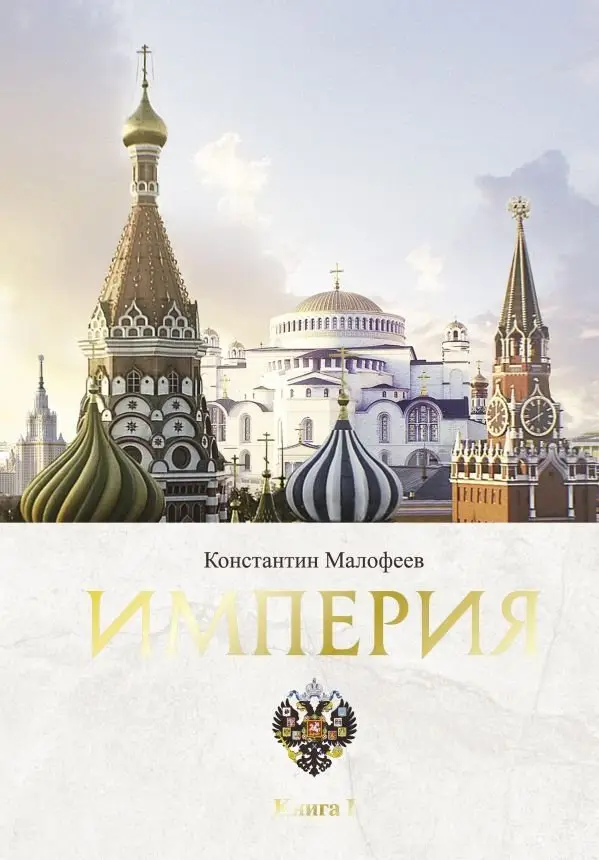
Империя. Книга I | Empire. Book I
By Малофеев Константин Валерьевич
Империя. Книга I
Константин Валерьевич Малофеев, 2022, Серия: Империя Царьград
Обзор
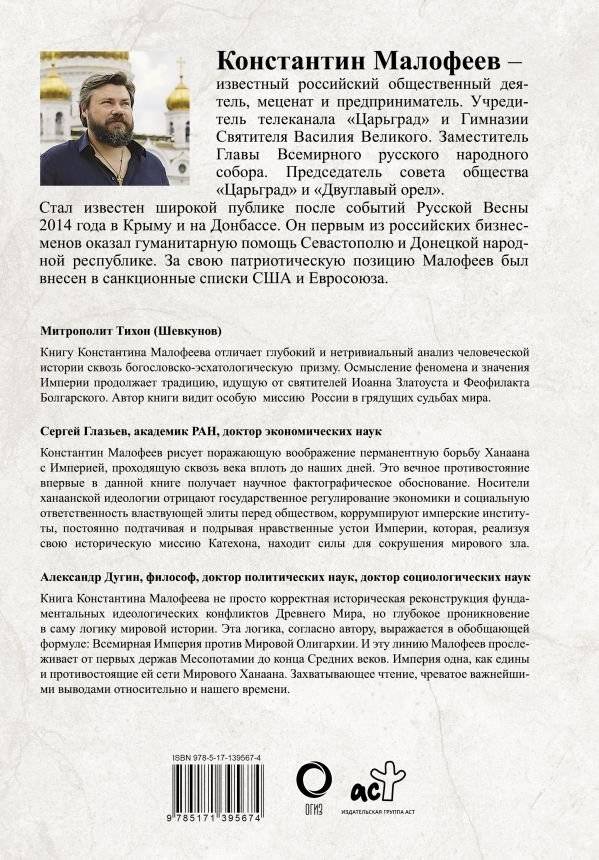
Книга Константина Малофеева посвящена истории Империи, её прошлому, настоящему и будущему. Автор исследует взаимодействие в мировой истории имперского начала, основанного на религиозно обоснованной власти, и торгово-финансового начала. Перед читателем разворачивается историческая панорама от Ассирии и Вавилона до падения Российской Империи и современного миропорядка. В первом томе рассматривается период зарождения Империи до падения Константинополя в 1453 году.
Кому подойдёт
- Интересующимся историей империй и мировой политикой.
- Читателям, изучающим взаимодействие власти и финансов в истории.
- Тем, кто хочет понять истоки современных геополитических процессов.
Ключевые особенности
- Язык: Русский
- Объем: 464 страницы
- Тип обложки: твердый переплёт
- Издательство: АСТ
- Год издания: 2022
- ISBN: 9785171395674
Empire. Book I
Konstantin Valeryevich Malofeev, 2022, Series: Empire Tsargrad
Overview
Konstantin Malofeev's book is dedicated to the history of Empire, its past, present, and future. The author examines the interplay in world history between the imperial principle, founded on religiously justified power, and the commercial-financial principle. A grand historical panorama unfolds before the reader, from Assyria and Babylon to the fall of the Russian Empire and the modern world order. The first volume covers the period from the birth of the Empire up to the fall of Constantinople in 1453.
Who it's for
- Individuals interested in the history of empires and global politics.
- Readers studying the interaction of power and finance throughout history.
- Those seeking to understand the origins of contemporary geopolitical processes.
Key features
- Language: Russian
- Pages: 464
- Binding: Hardcover
- Publisher: AST
- Publication Year: 2022
- ISBN: 9785171395674