 US: 2-4 weeks,
  Europe: 1-2 weeks, 🌍 Worldwide: 1-4 weeks ✈️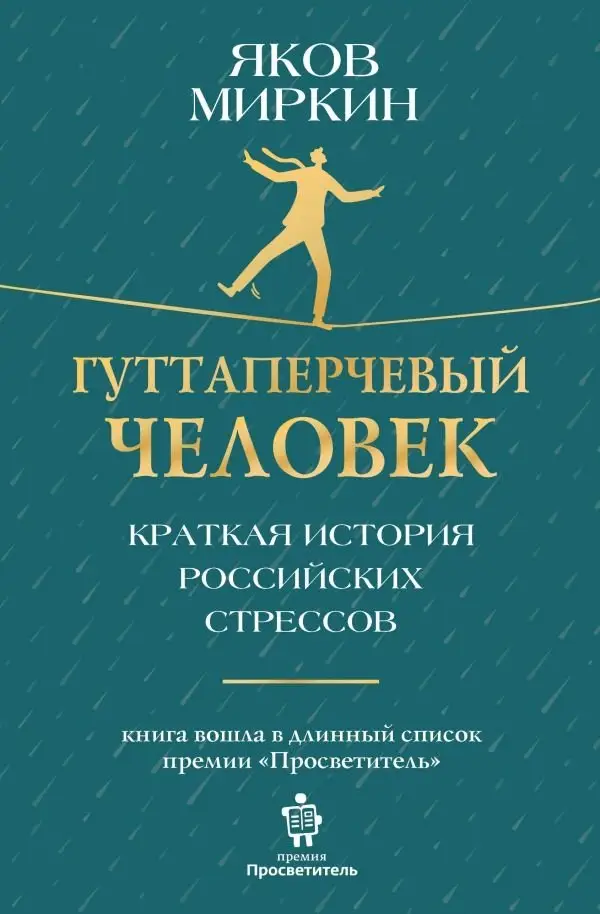
Гуттаперчевый человек. Краткая история российских стрессов | Gutta-Percha Man: A Brief History of Russian Stress
By Миркин Яков Моисеевич
Гуттаперчевый человек. Краткая история российских стрессов
Миркин Яков Моисеевич2024Серия «Экономические миры»
Обзор
В новом издании экономист и колумнист Яков Миркин рассматривает модели российского коллективного и семейного поведения во время войн, революций, реформ, репрессий, кризисов. В чем состоят особенности нашей психологии: как мы отвечаем на риски и вызовы в течение 300 лет? Какую реакцию на стресс из классической триады "Беги, замри, сражайся" мы выбираем? Поведение императоров, полководцев, политиков, ученых, деятелей культуры является примером определенной реакции на стресс. Книга вошла в длинный список премии "Просветитель".
Кому подойдёт
- Тем, кто интересуется историей России с точки зрения психологии.
- Читателям, желающим понять особенности российского поведения в кризисных ситуациях.
- Интересующимся личными и семейными стратегиями для экономического роста в России.
Ключевые особенности
- Язык: русский
- Страниц: 352
- Издательство: АСТ
- Серия: Экономические миры
- Год: 2024
- Штрих код: 9785171687007
Gutta-Percha Man: A Brief History of Russian Stress
Миркин Яков Моисеевич2024Серия «Экономические миры»
Overview
In this new edition, economist and columnist Yakov Mirkin examines the patterns of Russian collective and family behavior during wars, revolutions, reforms, repressions, and crises. What are the features of our psychology: how do we respond to risks and challenges over 300 years? What reaction to stress from the classic triad "Run, Freeze, Fight" do we choose? The behavior of emperors, military leaders, politicians, scientists, and cultural figures serves as an example of a certain reaction to stress. The book was included in the long list of the prestigious "Enlightener" prize.
Who it's for
- Those interested in the history of Russia from a psychological perspective.
- Readers wishing to understand the characteristics of Russian behavior in crisis situations.
- Those interested in personal and family strategies for economic growth in Russia.
Key features
- Language: Russian
- Pages: 352
- Publisher: АСТ
- Series: Экономические миры
- Year: 2024
- EAN: 9785171687007