 US: 2-4 weeks,
  Europe: 1-2 weeks, 🌍 Worldwide: 1-4 weeks ✈️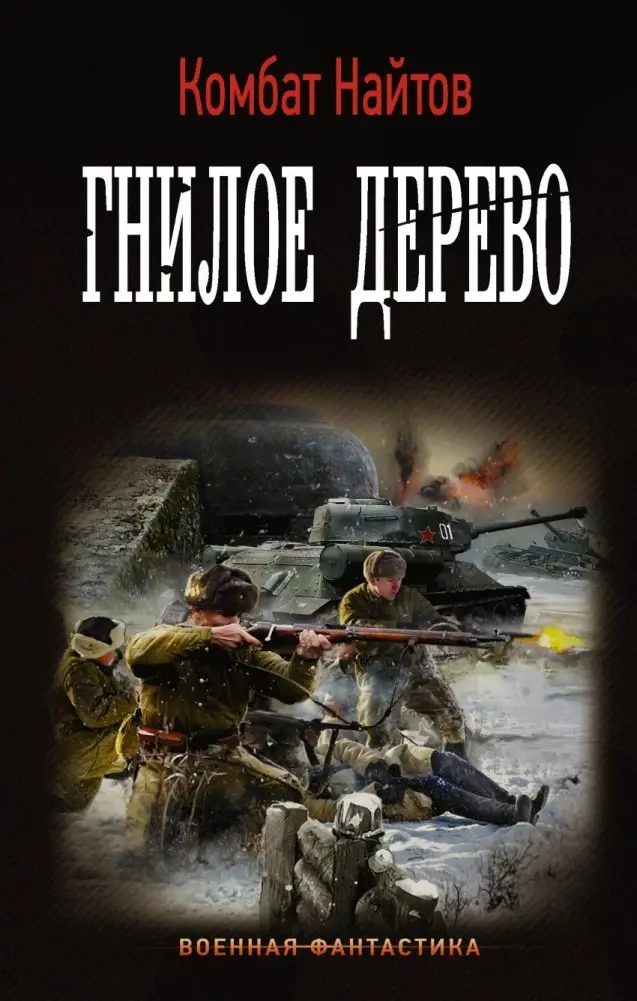
Гнилое дерево | Rotten Tree
By Найтов Комбат
Гнилое дерево
Найтов Комбат, 2017
Обзор
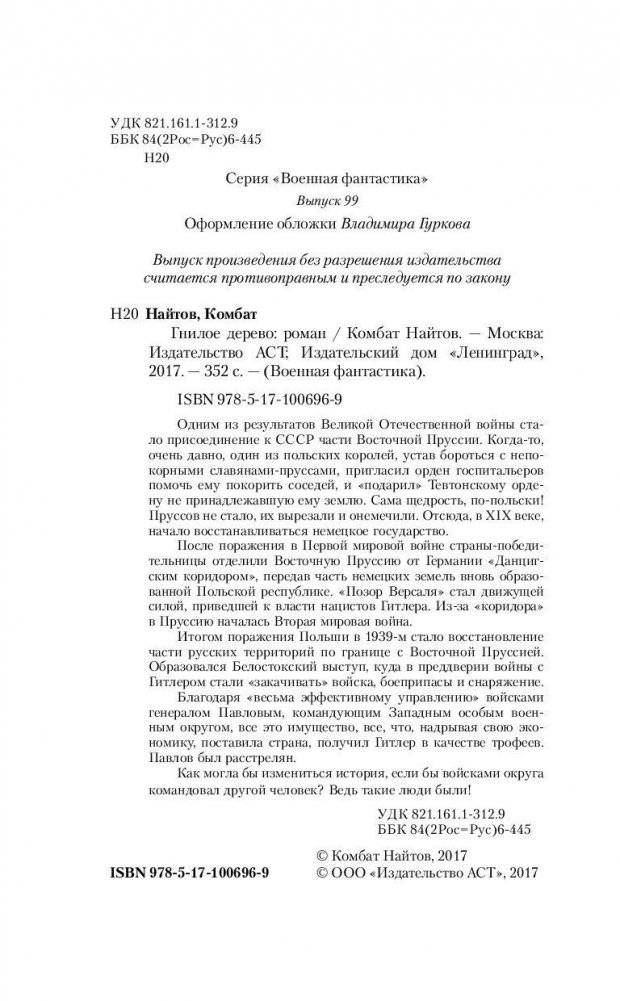
Книга исследует альтернативный сценарий истории, начиная с последствий Великой Отечественной войны и присоединения части Восточной Пруссии к СССР. В ней рассматривается исторический контекст региона, включая его прусское, польское и немецкое прошлое, а также события, приведшие ко Второй мировой войне. Особое внимание уделяется Белостокскому выступу и роли генерала Павлова в управлении войсками округа. Роман задается вопросом, как могла бы измениться история при другом командовании.
Кому подойдёт
- Любителям альтернативной истории.
- Интересующимся военной историей XX века.
- Читателям, предпочитающим книги с глубоким историческим подтекстом.
Ключевые особенности
- Язык: Русский
- Страниц: 352
- Тип обложки: твердый переплёт
- ISBN: 9785171006969
- Издательство: АСТ
- Серия: Военная фантастика
- Год издания: 2017
- Формат: 125x200 мм
Rotten Tree
Naytov Combat, 2017
Overview
This book explores an alternate history scenario, beginning with the aftermath of World War II and the annexation of part of East Prussia by the USSR. It delves into the region's historical context, including its Prussian, Polish, and German past, as well as the events leading up to World War II. Particular attention is given to the Bialystok salient and General Pavlov's role in commanding district troops. The novel poses the question of how history might have unfolded with different leadership.
Who it's for
- Fans of alternate history.
- Those interested in 20th-century military history.
- Readers who prefer books with a deep historical undertone.
Key features
- Language: Russian
- Pages: 352
- Binding: Hardcover
- ISBN: 9785171006969
- Publisher: AST
- Series: Military Fiction
- Year: 2017
- Format: 125x200 mm