 US: 2-4 weeks,
  Europe: 1-2 weeks, 🌍 Worldwide: 1-4 weeks ✈️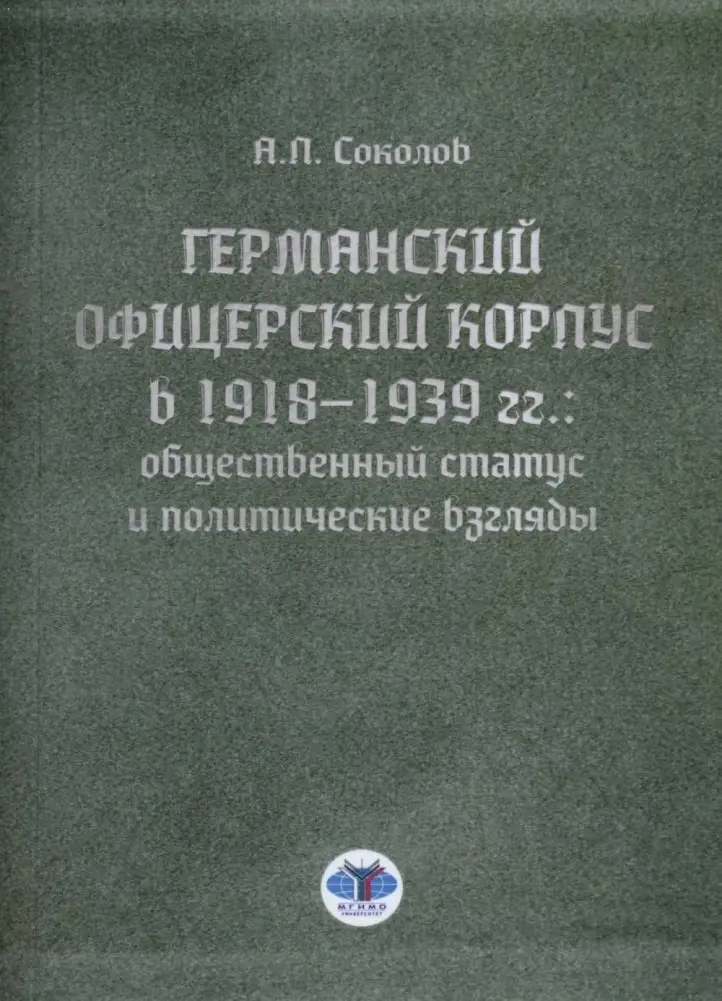
Германский офицерский корпус в 1918-1939 гг.: общественный статус и политические взгляды: монография | The German Officer Corps, 1918-1939: Social Status and Political Views
By Соколов А.П
Германский офицерский корпус в 1918-1939 гг.: общественный статус и политические взгляды: монография
Соколов А.П., 2025
Обзор
Монография исследует изменения в общественном статусе и морально-политических взглядах германского офицерского корпуса в период с 1918 по 1939 год. Этот период охватывает трансформацию вооруженных сил Германии от армии Германской империи после Первой мировой войны, через Рейхсвер Веймарской республики, к Вермахту нацистской Германии. В книге анализируется процесс адаптации офицерства к кардинально меняющимся историческим условиям, когда армия стала инструментом развязывания Второй мировой войны и опорой национал-социалистической диктатуры.
Кому подойдёт
- Историкам-германистам
- Военным историкам
- Специалистам по истории международных отношений
Ключевые особенности
- Язык: русский
- Страниц: 335
- Тип обложки: мягкая обложка
- Издательство: МГИМО-Университет
- Год издания: 2025
- ISBN: 9785922829663
The German Officer Corps, 1918-1939: Social Status and Political Views
A.P. Sokolov, 2025
Overview
This monograph examines the evolution of the German officer corps' social standing and political ideology during a dynamic period in German history, from the aftermath of World War I to the invasion of Poland in 1939. It traces the transformation of the German armed forces from a large imperial army to the compact Reichswehr of the Weimar Republic, and subsequently to the expansive Hitler's Wehrmacht, which became an instrument of war and a pillar of the Nazi regime. The study analyzes how society and its officers adapted to drastically changing historical circumstances on three separate occasions.
Who it's for
- Scholars specializing in German history
- Military historians
- Experts in international relations history
Key features
- Language: Russian
- Pages: 335
- Binding: Softcover
- Publisher: MGIMO University
- Publication Year: 2025
- ISBN: 9785922829663