 US: 2-4 weeks,
  Europe: 1-2 weeks, 🌍 Worldwide: 1-4 weeks ✈️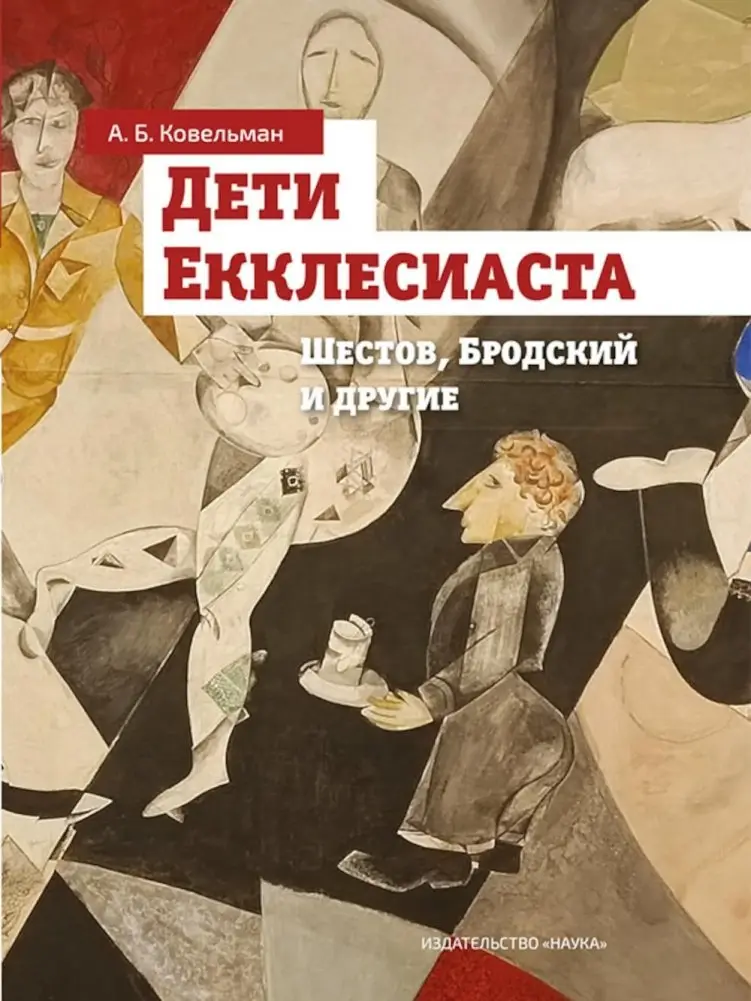
Дети Екклесиаста | The Children of Ecclesiastes
By Ковельман А.Б.
Дети Екклесиаста
Ковельман А.Б., 2024
Обзор
Книга исследует попытки интеллектуалов найти цель и смысл истории, сталкиваясь с фундаментальными противоречиями европейской культуры, такими как родовое и всемирное, небесное и земное. Эти внутренние конфликты отражаются в исторических событиях, включая трагедии прошлого столетия и вызовы века нынешнего. В центре внимания — тексты Иосифа Бродского и его учителя Льва Шестова, чья идея «странствования по душам» определяет маршрут исследования.
Кому подойдёт
- Читателям, интересующимся философией и историей европейской мысли.
- Тем, кто ищет осмысление противоречий в культуре и истории.
- Любителям творчества Иосифа Бродского и Льва Шестова.
- Возраст: 16+
Ключевые особенности
- Язык: русский
- Страниц: 247
- Тип обложки: твердая обложка
- Издательство: Наука
- Год издания: 2024
- ISBN: 9785020404649
The Children of Ecclesiastes
A.B. Kovelman, 2024
Overview
This book examines intellectuals' attempts to find purpose and meaning in history as it confronts them with its formidable face. In their search for meaning, they encounter contradictions deeply embedded in European culture: the particular and the universal, the celestial and the terrestrial. These contradictions can provoke inner turmoil and lead to conflict and war, as evidenced by the tragic history of the past century and the unsettling start of the current one. The work centers on texts by Joseph Brodsky and his favored philosopher, Lev Shestov, who originated the concept of "wandering through souls." This focus shapes the journey, spanning from the dialogues of Plato, the treatises of Plotinus and Philo of Alexandria, and Spinoza's logical reasoning to essays by Edward Said, poems by Ezra Pound, prose by Isaac Bashevis Singer, and Vladimir Solovyov's "Three Conversations." An endless debate unfolds, ultimately directed toward the "here and now" as a potential end to history.
Who it's for
- Readers interested in philosophy and the history of European thought.
- Those seeking to understand cultural and historical contradictions.
- Fans of Joseph Brodsky and Lev Shestov.
- Age: 16+
Key features
- Language: Russian
- Pages: 247
- Binding: Hardcover
- Publisher: Nauka
- Year: 2024
- ISBN: 9785020404649