 US: 2-4 weeks,
  Europe: 1-2 weeks, 🌍 Worldwide: 1-4 weeks ✈️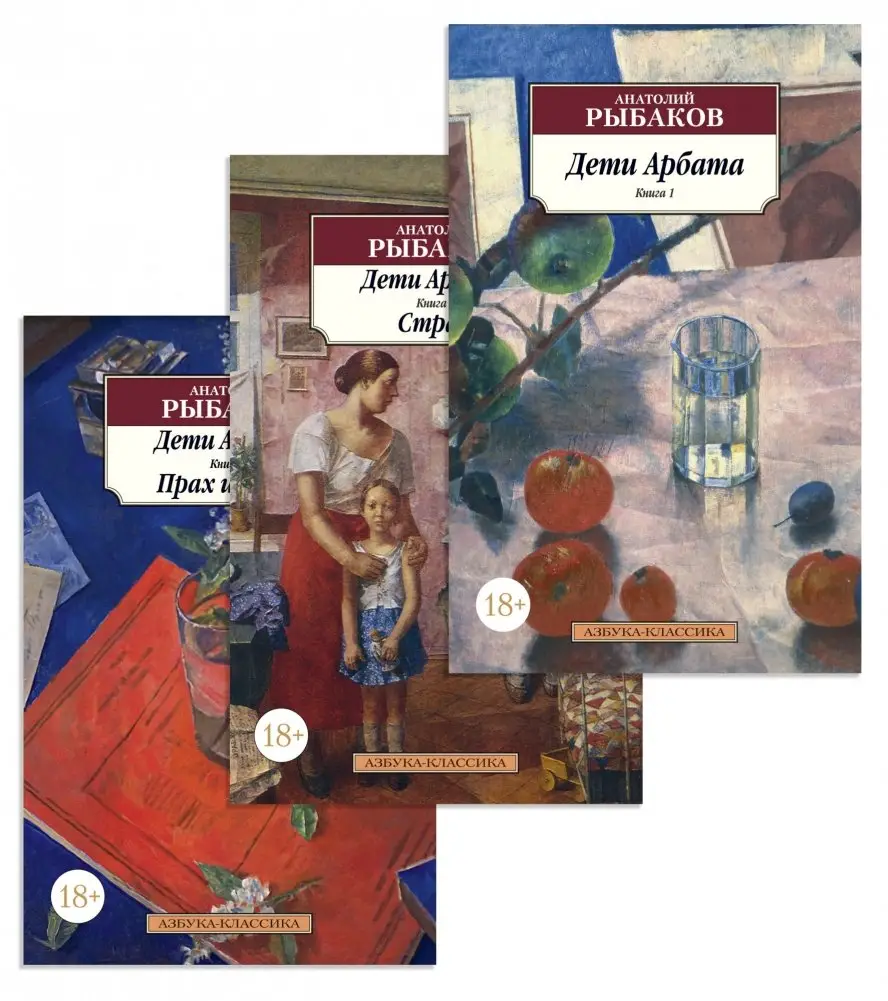
Дети Арбата (комплект из 3 книг) | Children of the Arbat
By Рыбаков Анатолий Наумович
Дети Арбата (комплект из 3 книг)
Анатолий Наумович Рыбаков, 2024, Серия: Азбука-Классика
Обзор
«Дети Арбата» — значимое произведение русской литературы XX века, повествующее о жизни столичной молодежи 1930-х годов. Книга исследует судьбы друзей, каждому из которых предначертан свой путь: от высокого положения до ссылки. Произведение затрагивает темы сохранения достоинства перед лицом государственного произвола и стремления к власти.
Анатолий Рыбаков написал свой главный труд в 1960-х, но публикация состоялась лишь спустя два десятилетия. Эта история первого советского поколения продолжает вызывать неподдельный интерес у читателей.
Кому подойдёт
- Любителям исторической прозы.
- Читателям, интересующимся советским периодом.
- Тем, кто ценит глубокие сюжеты о человеческих судьбах.
Ключевые особенности
- Язык: русский
- Объем: 1792 страницы
- Тип обложки: мягкая обложка
- Издательство: Азбука
- Серия: Азбука-Классика
- ISBN: 9785389185715
- Год издания: 2024
Children of the Arbat (3 Book Set)
Anatoly Naumovich Rybakov, 2024, Series: Azbuka-Classics
Overview
"Children of the Arbat" is a significant work of 20th-century Russian literature, chronicling the lives of Moscow's youth in the 1930s. The novel explores the destinies of friends, each facing a unique path, from positions of influence to exile. It delves into themes of maintaining dignity against state arbitrariness and the pursuit of power.
Anatoly Rybakov penned his seminal work in the 1960s, though it was not published for another twenty years. This narrative of the first Soviet generation continues to captivate readers with its enduring relevance.
Who it's for
- Readers of historical fiction.
- Those interested in the Soviet era.
- Individuals who appreciate profound stories about human destinies.
Key features
- Language: Russian
- Pages: 1792
- Binding: Softcover
- Publisher: Azbuka
- Series: Azbuka-Classics
- ISBN: 9785389185715
- Publication Year: 2024