 US: 2-4 weeks,
  Europe: 1-2 weeks, 🌍 Worldwide: 1-4 weeks ✈️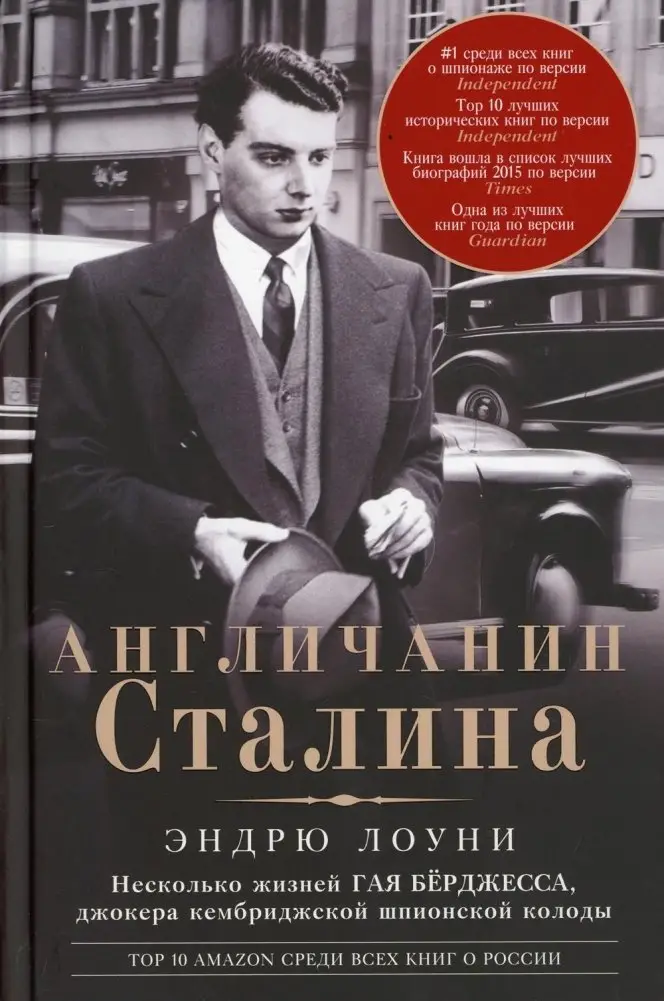
Англичанин Сталина. Несколько жизней Гая Бёрджесса | Stalin's Englishman: The Lives of Guy Burgess
By Лоуни Эндрю
Англичанин Сталина. Несколько жизней Гая Бёрджесса
Эндрю Лоуни, 2024
Обзор
Эта книга посвящена Гаю Бёрджессу, эксцентричному агенту советской разведки и одному из членов Кембриджской пятерки. В 1951 году он бежал в СССР, где служил в течение двенадцати лет. Несмотря на службу, он так и не смог полностью адаптироваться к жизни в сталинской России, оставаясь англичанином по своей сути. Деятельность Бёрджесса породила множество спекуляций, а его личность вызывала противоречивые оценки современников и сотрудников КГБ. Автор представляет многогранный портрет интеллектуала, оказавшегося под влиянием коммунистической идеологии 1930-40-х годов.
Кому подойдёт
- Интересующимся историей шпионажа XX века.
- Тем, кто изучает биографии членов Кембриджской пятерки.
- Читателям, увлекающимся историей СССР и сталинского периода.
- Любителям биографических исследований западной интеллигенции.
Ключевые особенности
- Язык: русский
- Тип обложки: твердая обложка
- Количество страниц: 416
- ISBN: 9785227105622
- Издательство: Центрполиграф
- Серия: Всемирная история
- Год издания: 2024
Stalin's Englishman: The Lives of Guy Burgess
Andrew Lownie, 2024
Overview
This book explores the life of Guy Burgess, an eccentric Soviet intelligence agent and a key figure in the Cambridge Five spy ring. After defecting to the USSR in 1951, Burgess served the country that granted him asylum for twelve years. However, remaining quintessentially English, he struggled to fully adapt to life in Stalin's Russia. His activities have long been a subject of speculation, with conflicting accounts from contemporaries and KGB handlers shaping perceptions of his complex personality. Andrew Lownie crafts a multi-layered portrait of an unconventional intellectual, a product of the Western left-wing intelligentsia captivated by communist ideology in the 1930s and 1940s.
Who it's for
- Readers interested in 20th-century espionage history.
- Those studying the biographies of the Cambridge Five.
- Individuals fascinated by the history of the USSR and the Stalin era.
- Fans of biographical studies on Western intellectuals.
Key features
- Language: Russian
- Binding: Hardcover
- Pages: 416
- ISBN: 9785227105622
- Publisher: Centrpoligraph
- Series: Vsemirnaya istoriya (World History)
- Year: 2024